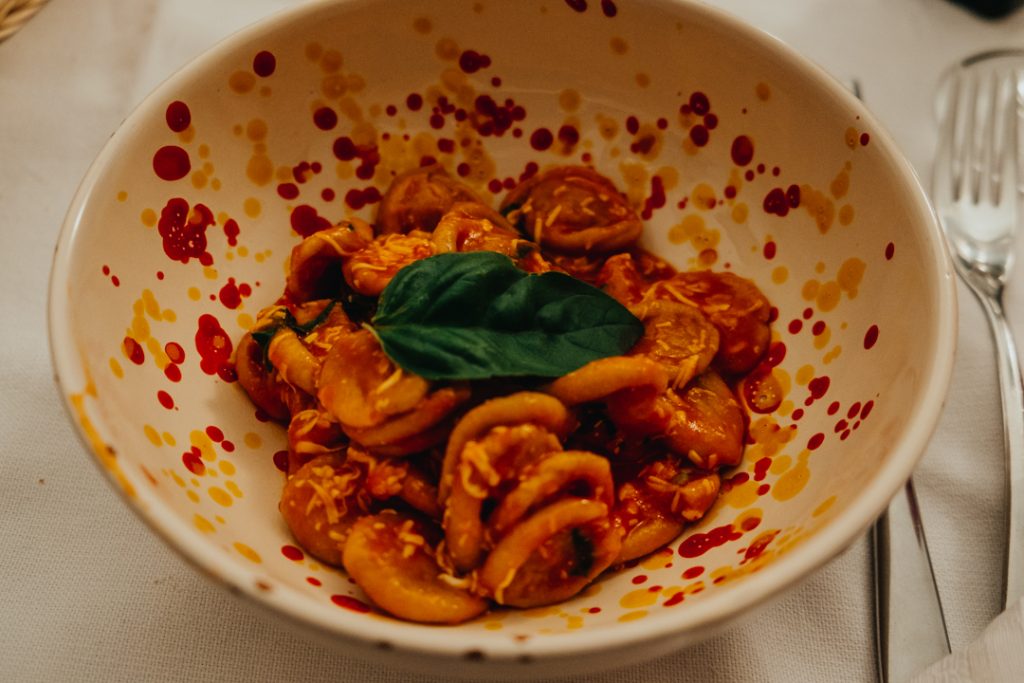
2 hr 30 min
Orecchiette Pasta Workshop at a Traditional Puglia Farm
- Entry ticket
- Mobile voucher
- Valid same day
- Free cancellation
Ostuni Pasta Cooking Class — Orecchiette, Semolina and Farmhouse Kitchens
Semolina under your thumb, Valle d'Itria light on the table.
Compare fares, pick the fit — all bookings are mobile-voucher and eligible for free cancellation where shown.
2 hr 30 min
3 hr
3 hr
| Experience | Duration | Rating | Small group | Free cancel. | Price | |
|---|---|---|---|---|---|---|
|
Standard Entry
Most popular
Orecchiette Pasta Workshop at a Traditional Puglia Farm
|
2 hr 30 min | ★ 4.9 | ✓ | ✓ | €54 | Book → |
|
Standard Entry
Family Pasta-Making Experience in Ostuni Countryside
|
3 hr | ★ 5.0 | ✓ | ✓ | €122 | Book → |
|
Standard Entry
Fresh Pasta Workshop at Cantine Amalberga Winery
|
3 hr | ★ 5.0 | — | ✓ | €86 | Book → |
Worth it for hands-on cooks, not passive diners
An ostuni pasta cooking class is not a dinner with a demonstration attached — you pay for a half-day of instruction and you leave with a technique you can repeat at home. The value math is simple: semola di grano duro, a wooden board, and a nonna correcting your thumb angle until orecchiette stop tearing. Compare that to a restaurant meal at similar cost that ends when the plate is cleared. The masseria and countryside options add trulli-dotted olive groves and Valle d'Itria views; the winery session pairs the workshop with Puglian tastings; the in-home format trades scenery for genuine kitchen-table immersion. Ostuni pasta cooking class tours pay off for travellers who want skill and cultural context rather than another course. If you want to eat well without flour on your hands, book a table instead — a pasta-making tour in Ostuni rewards participation, not observation.
Bottom line: Book an ostuni pasta cooking class tour if you want the technique in your hands — otherwise ostuni pasta cooking class tickets buy you an expensive lunch.
They complement each other; travelers often find the ostuni pasta cooking class superior for rural farmhouse immersion, while the Lecce alternative excels in historic urban settings. Booking your ostuni pasta cooking class tour is a straightforward way to guarantee a seat at a traditional kitchen table.
|
Top pick Ostuni Classes |
Lecce Classes | |
|---|---|---|
| Setting | Countryside Masseria (Farmhouse) | |
| Primary Skill | Orecchiette shaping | |
| Typical Duration | 2–3 hours | |
| Best Arrival | 09:00–18:00 | |
| Dining Inclusion | Full meal included | |
| Primary Audience | Families and couples | |
| See tickets & prices |
Verdict: Choose the Ostuni experience if you prioritize an authentic farm-to-table atmosphere, or select the Lecce option for deeper access to Baroque city culture and diverse culinary workshops.
Hand-picked experiences loved by thousands of travelers
3 hours
Free Cancellation
Master fresh pasta and Italy's beloved dessert in an authentic home kitchen with a welcoming host
3 hours
Free Cancellation
Craft handmade pasta in a private villa, then savor a traditional multi-course Puglian feast with wine
2-3 hours
Free Cancellation
Master the art of handmade pasta with a local family in a charming Puglian countryside setting
2 hours
Free Cancellation
Master traditional pasta-making techniques while discovering Puglia's wine culture at a charming city-center venue
1 hour
Free Cancellation
Learn to craft authentic Puglian dishes at a working vineyard with estate wine tastings included
3 hours
Free Cancellation
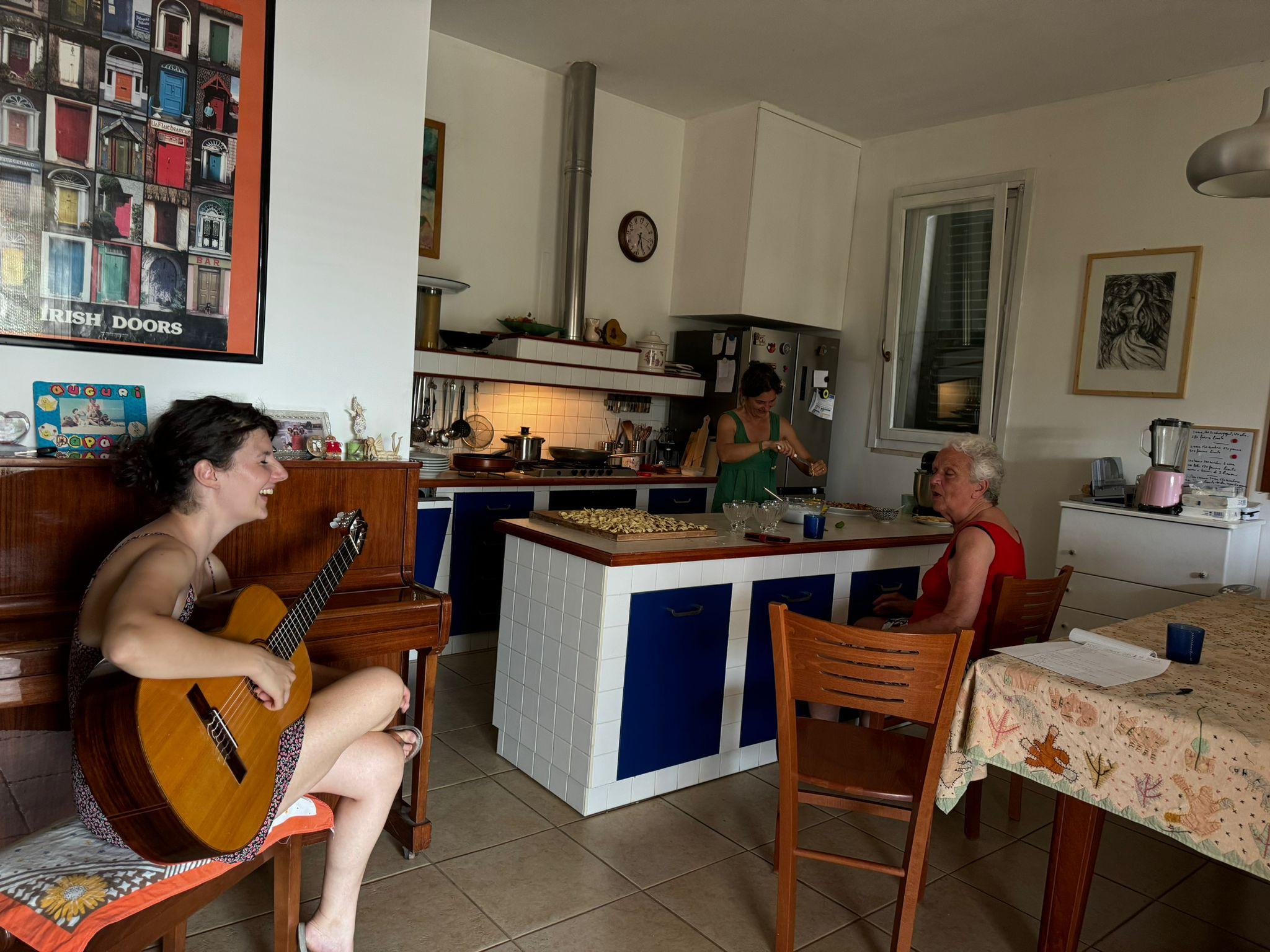
Join a local family for hands-on cooking lessons followed by live classical guitar as you dine
1.5 hours
Free Cancellation
Journey through centuries-old olive groves and discover traditional oil-making techniques with a tasting session
30 minutes
Free Cancellation
Explore the stunning white-washed streets of Ostuni aboard a charming electric three-wheeler
Tour local stalls for fresh seasonal produce and flour.
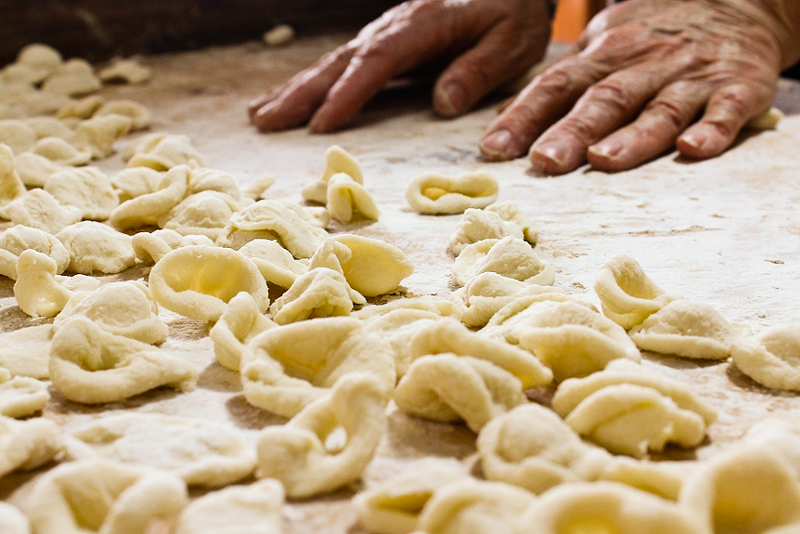
Learn to shape orecchiette and other traditional shapes.
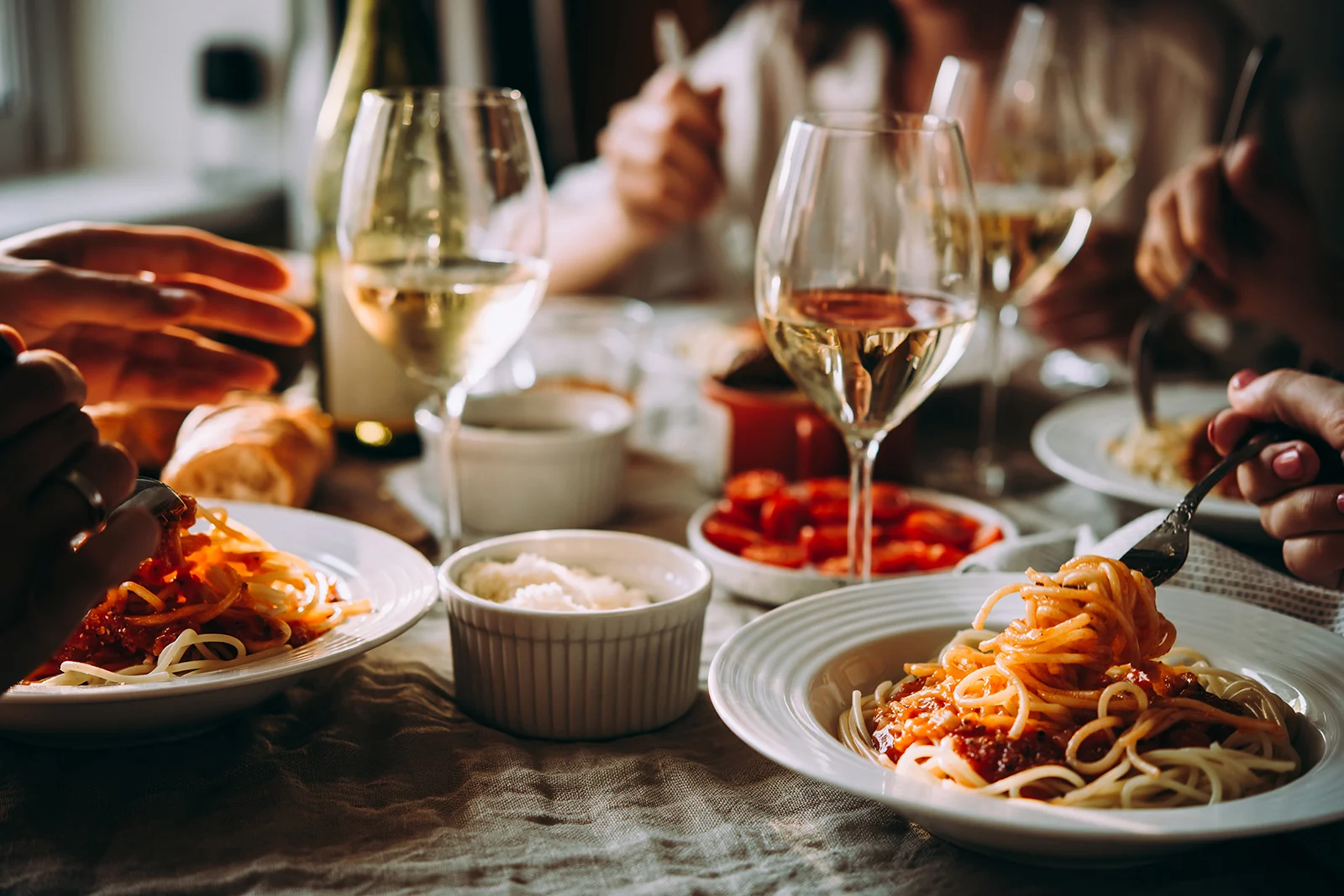
Prepare the sauce and enjoy your meal with local wine.
Learn the traditional technique of forming Puglian 'little ears' pasta by hand.
Work inside an authentic, traditional home or historic building.
Understand the importance of local semolina and seasonal vegetables.
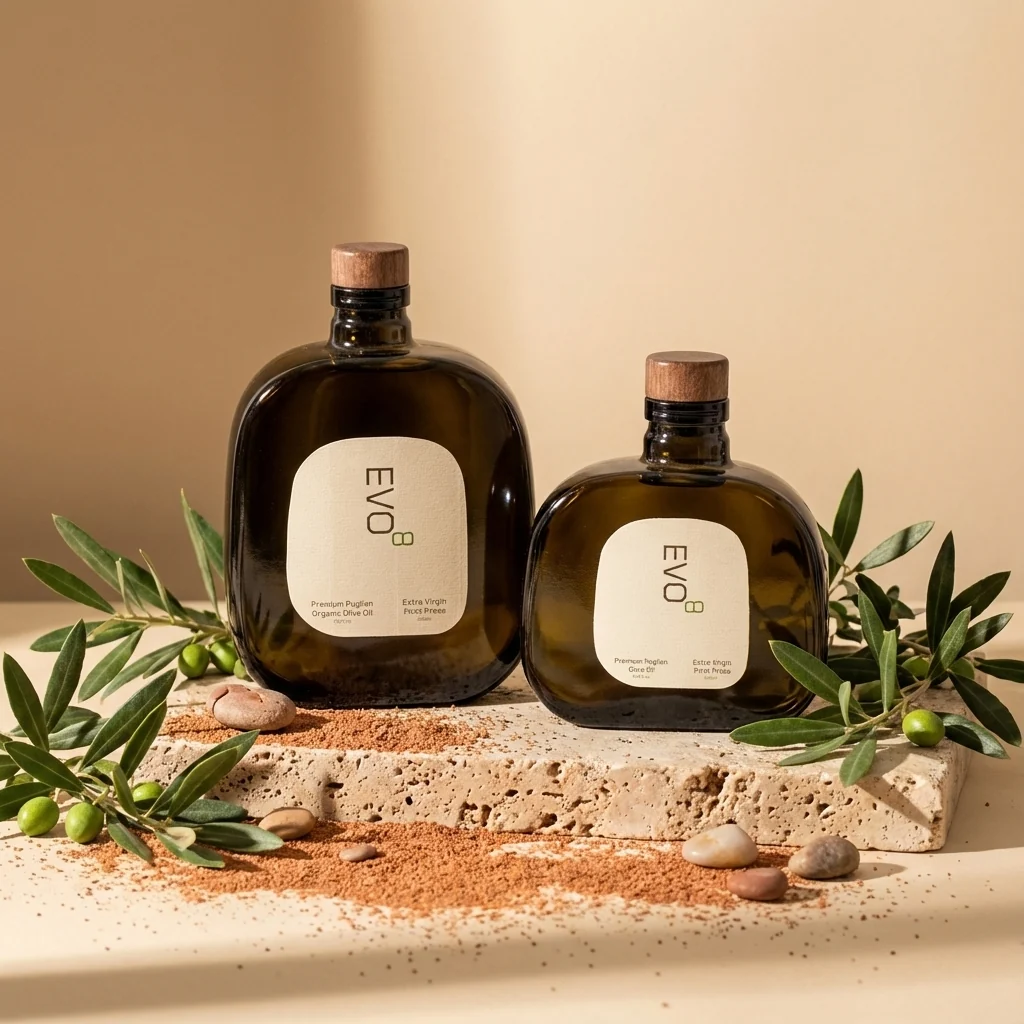
Sample regional extra virgin olive oil used in your meal.
Enjoy the meal you prepared with the host and group.
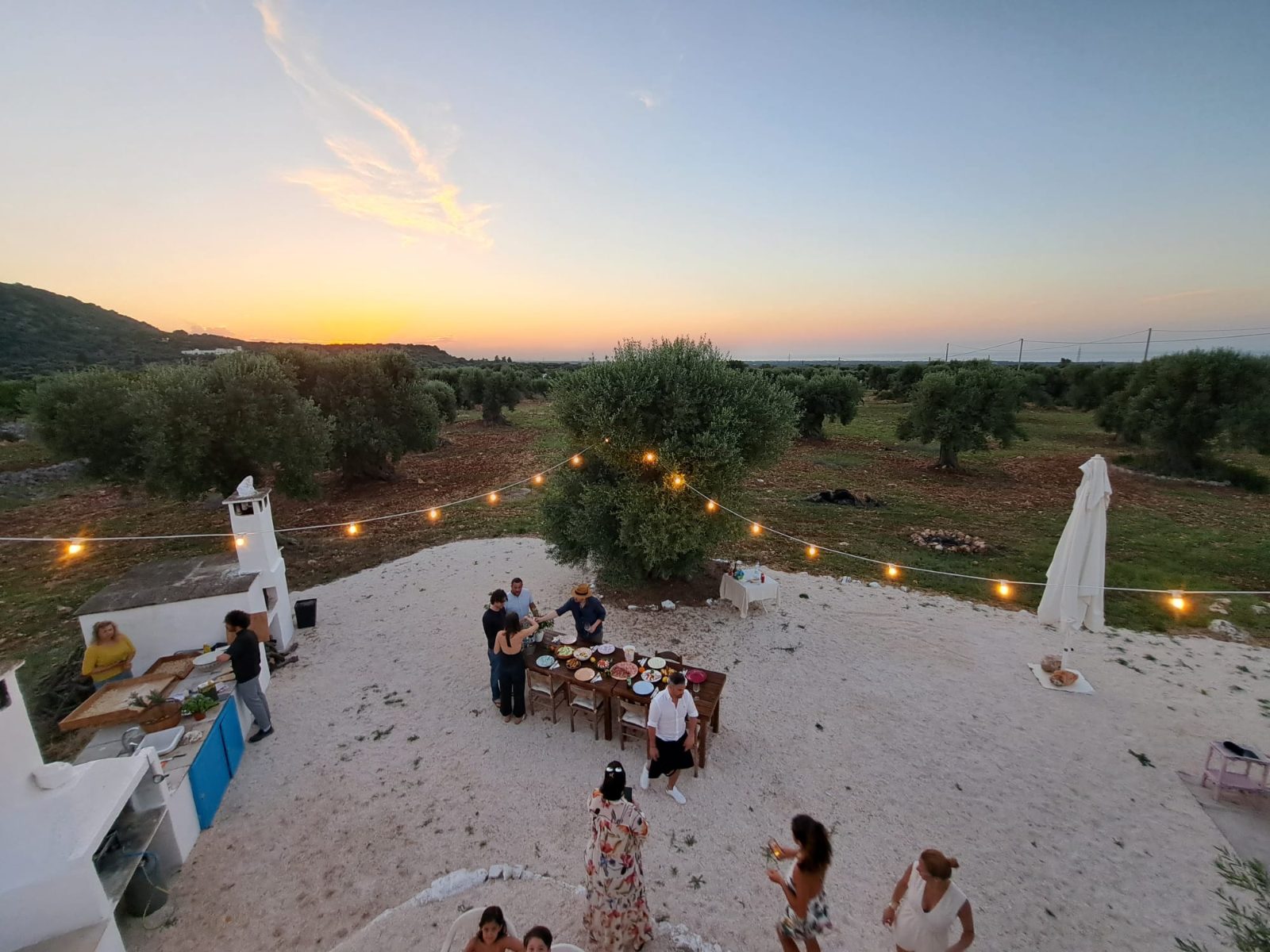
You arrive in Ostuni, in the Province of Brindisi, and the address is less a landmark than a direction: out of the white town, down through the olive plain. The best arrival window runs 09:00 to 18:00, which is when ingredients are freshest and the light still works in your favour. Your host meets you at the gate.
There is no entrance fee to pay at a door — an Ostuni pasta cooking class is booked per session, and your voucher is the whole transaction.
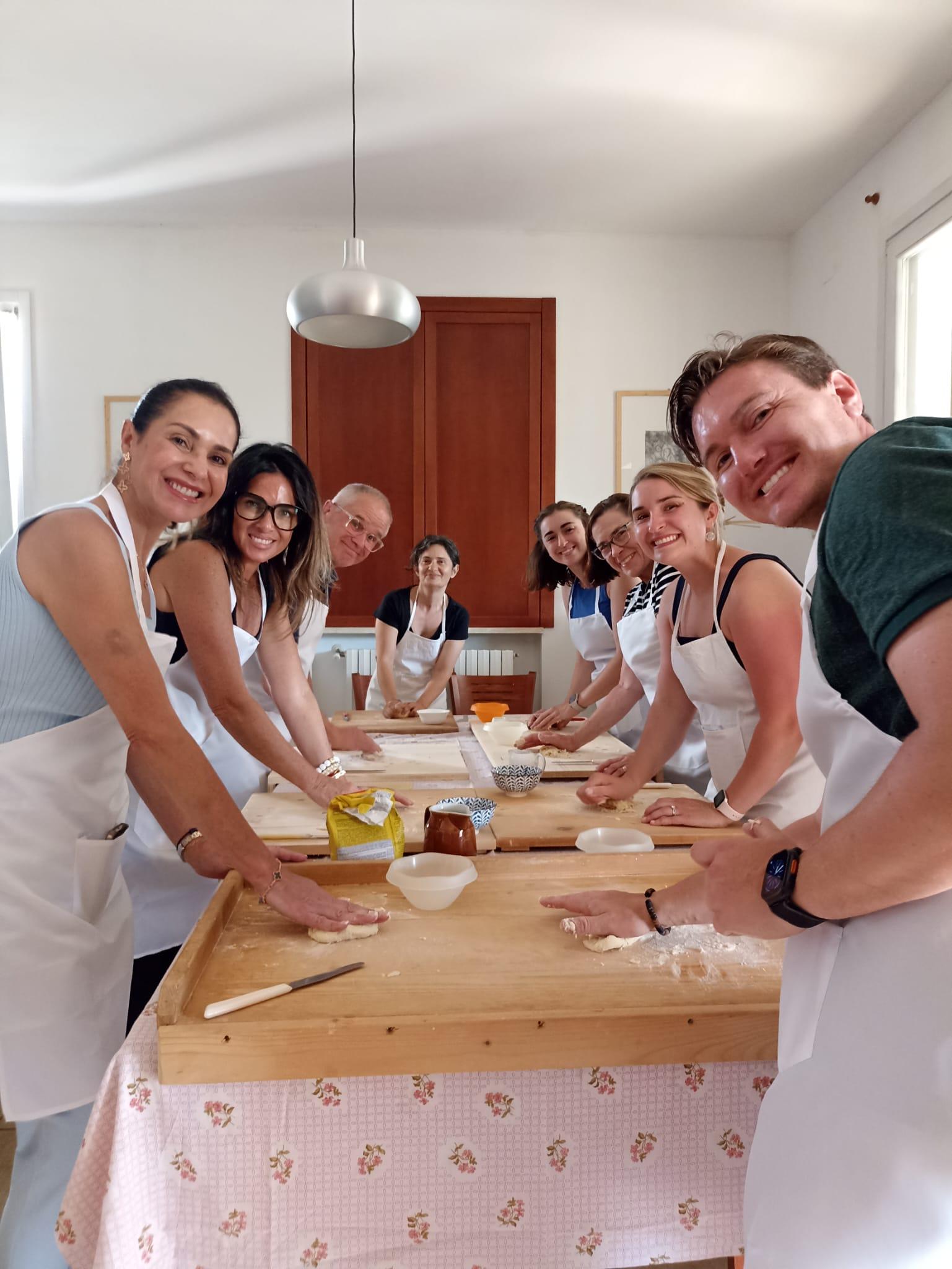
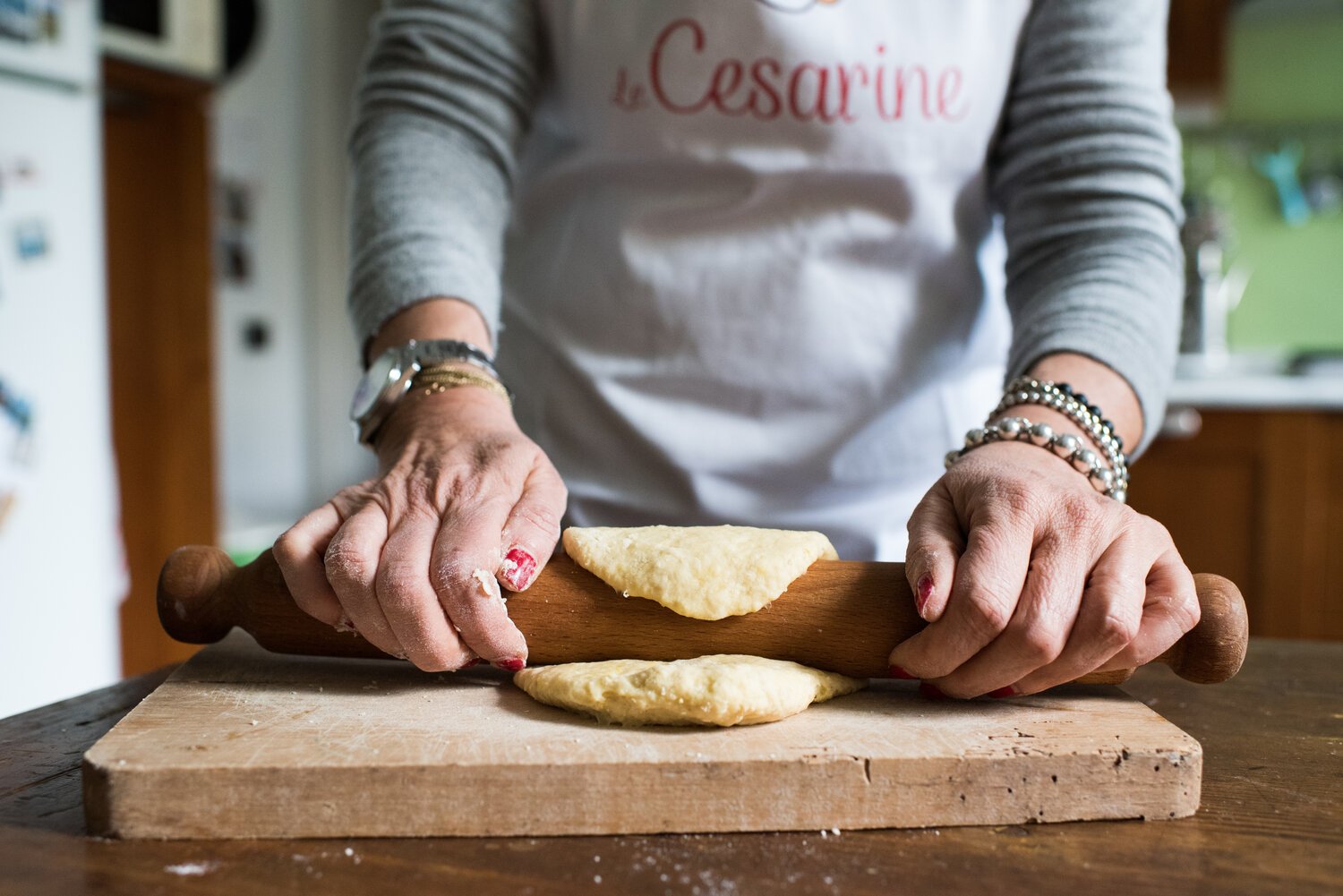
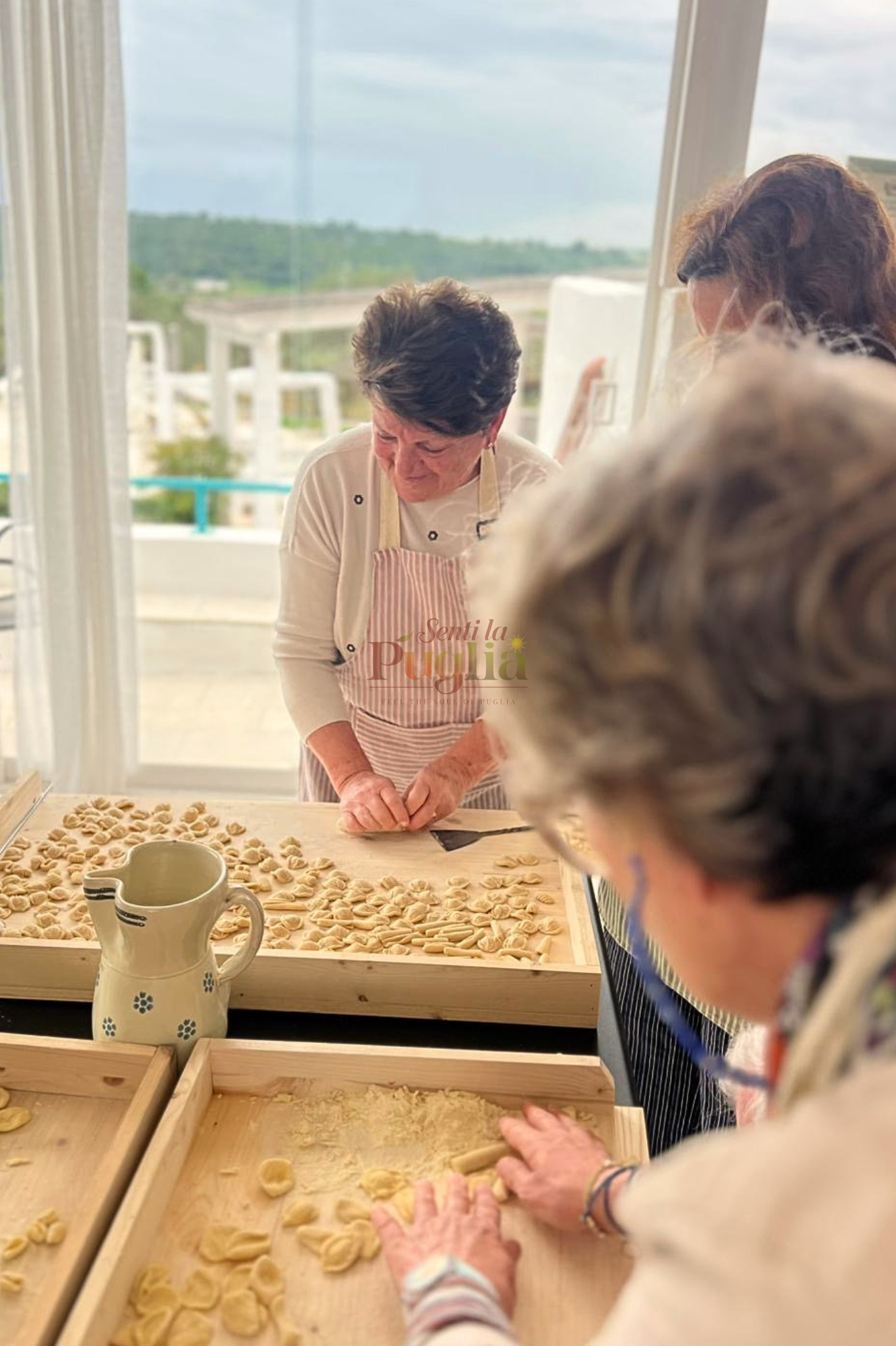
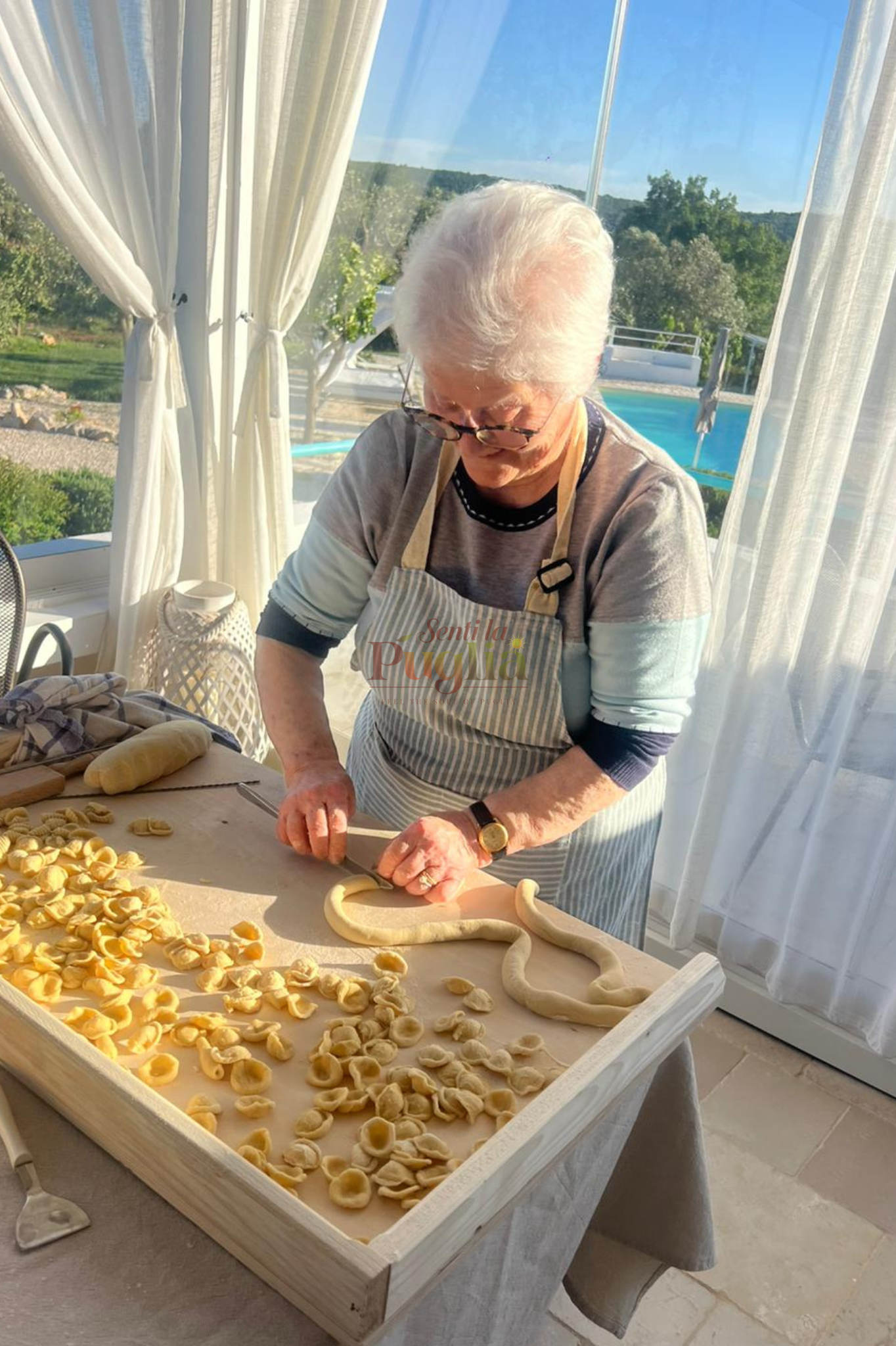
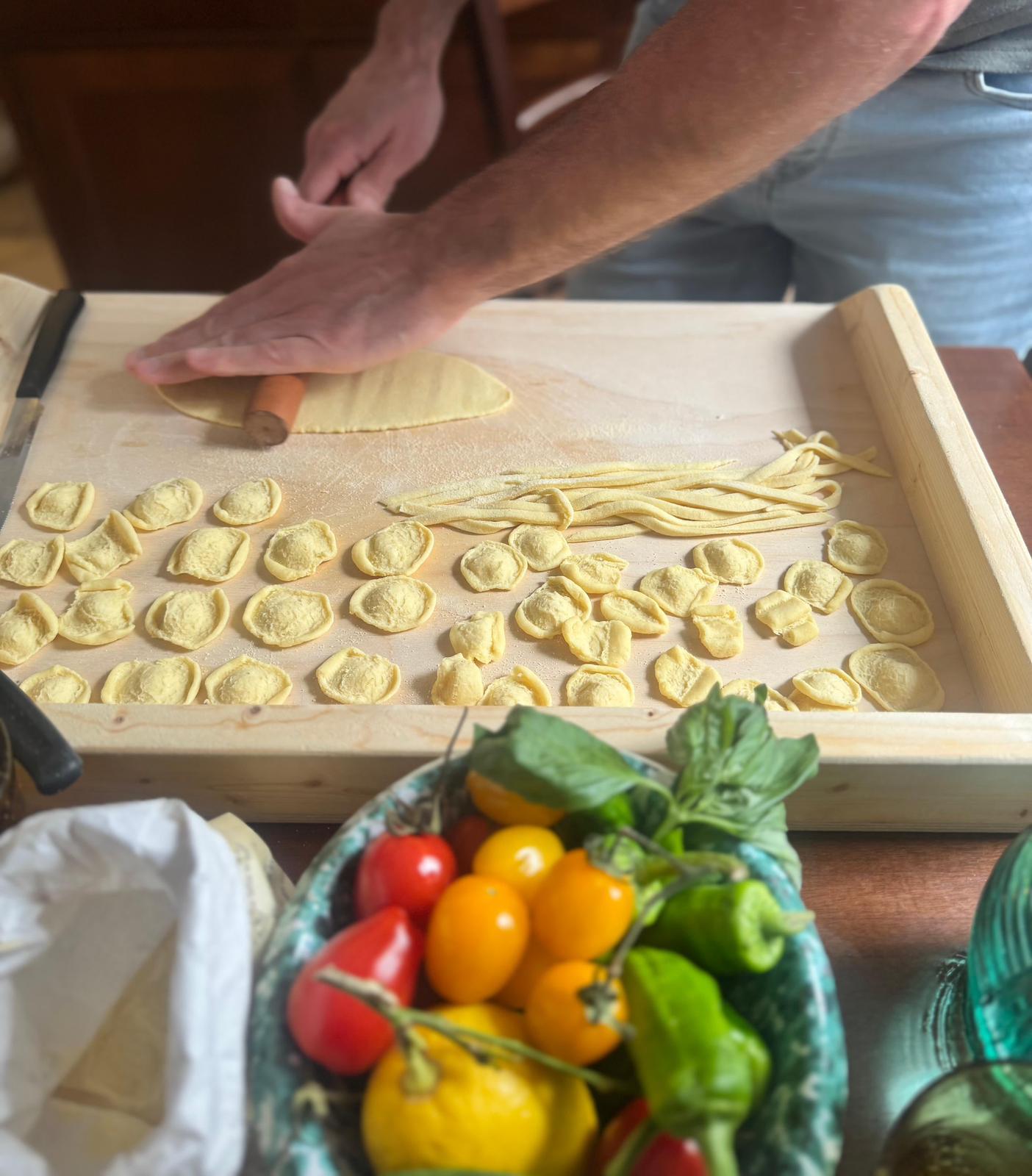
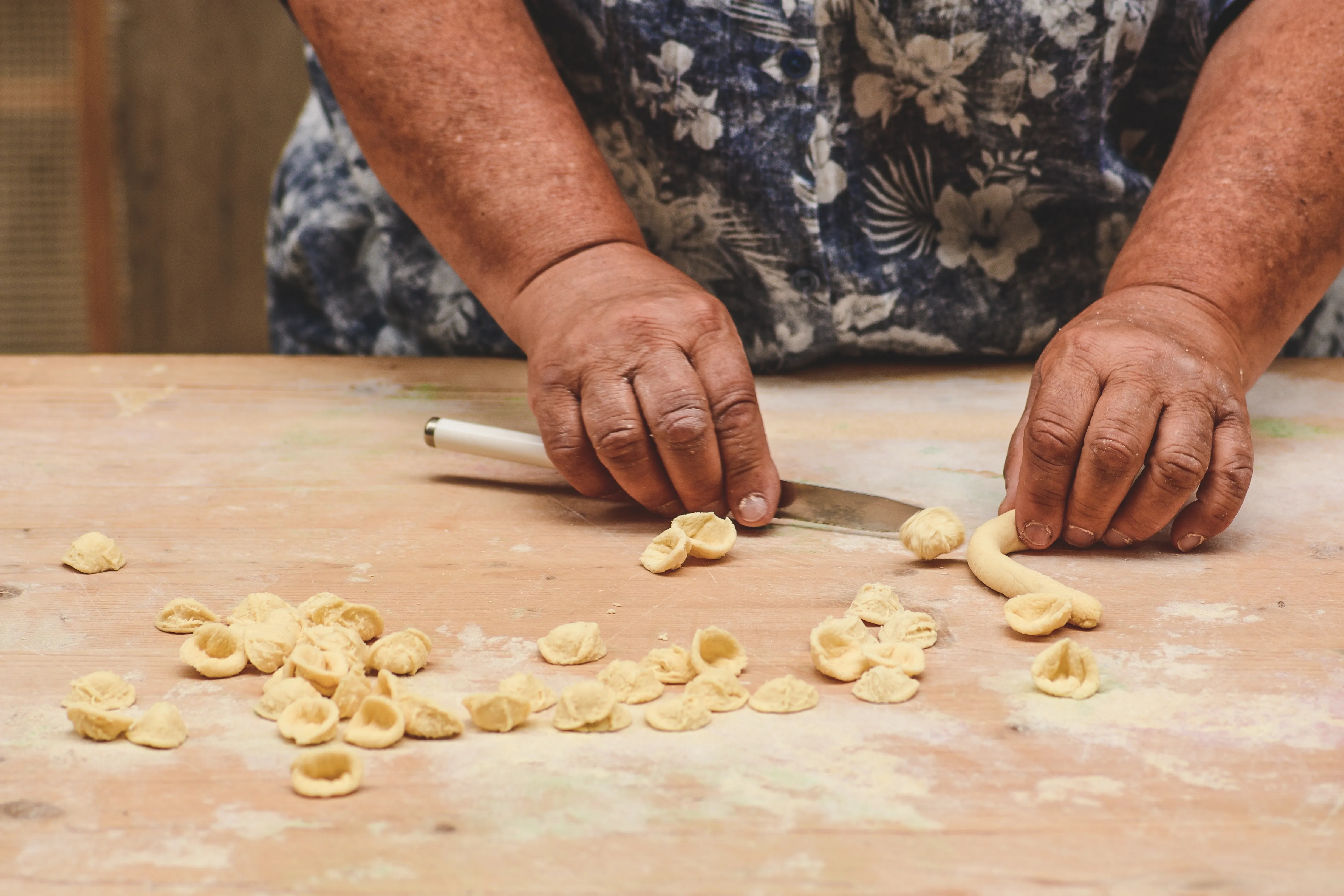
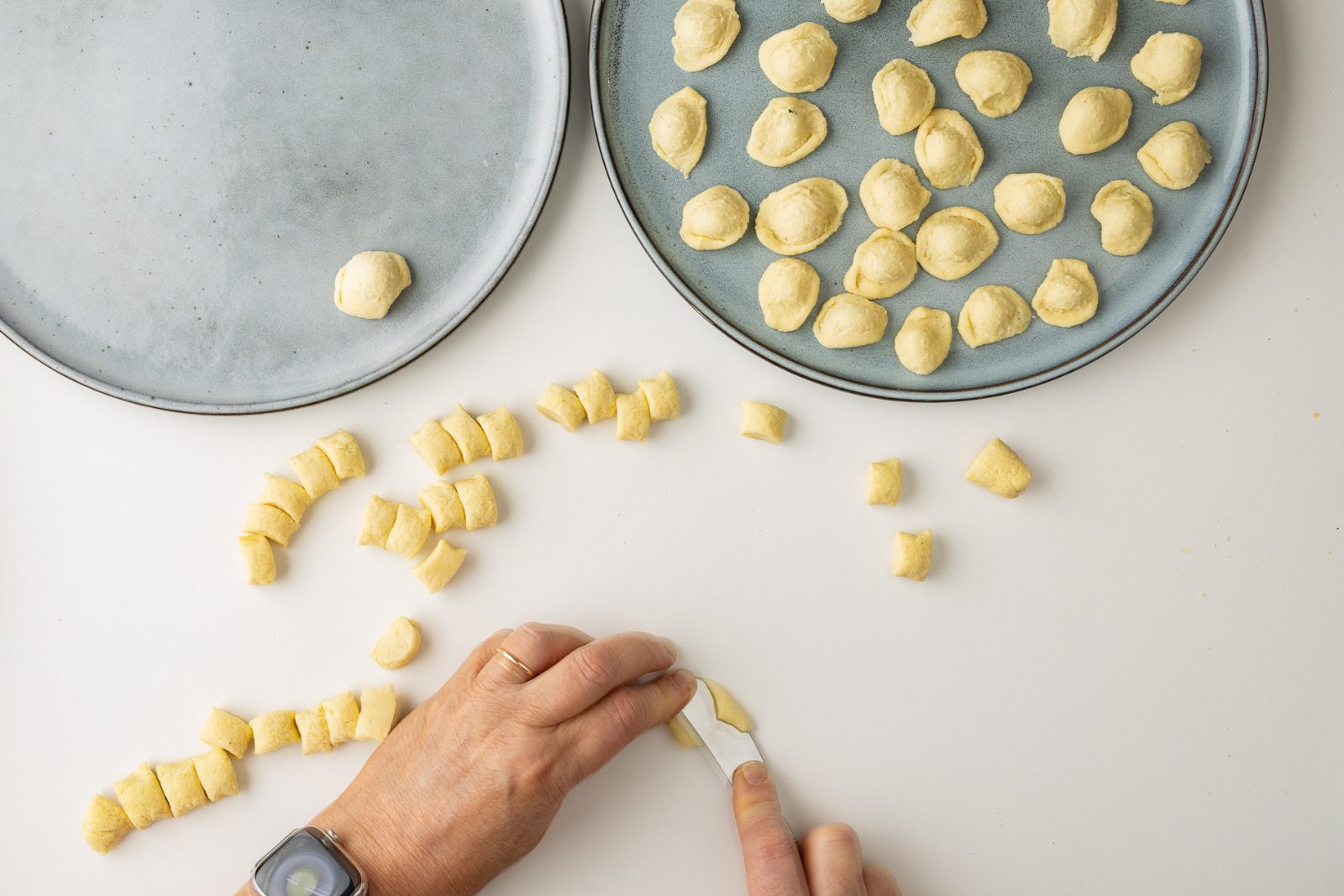
You wash your hands. You tip semolina onto a wooden board, make a well, and add water by feel rather than by scale. You knead for ten minutes, until the dough stops sticking and starts pushing back. Then the knife: a small piece of rope-rolled dough, dragged toward you, flipped over your thumb. The first twenty are wrong. The next twenty are not.
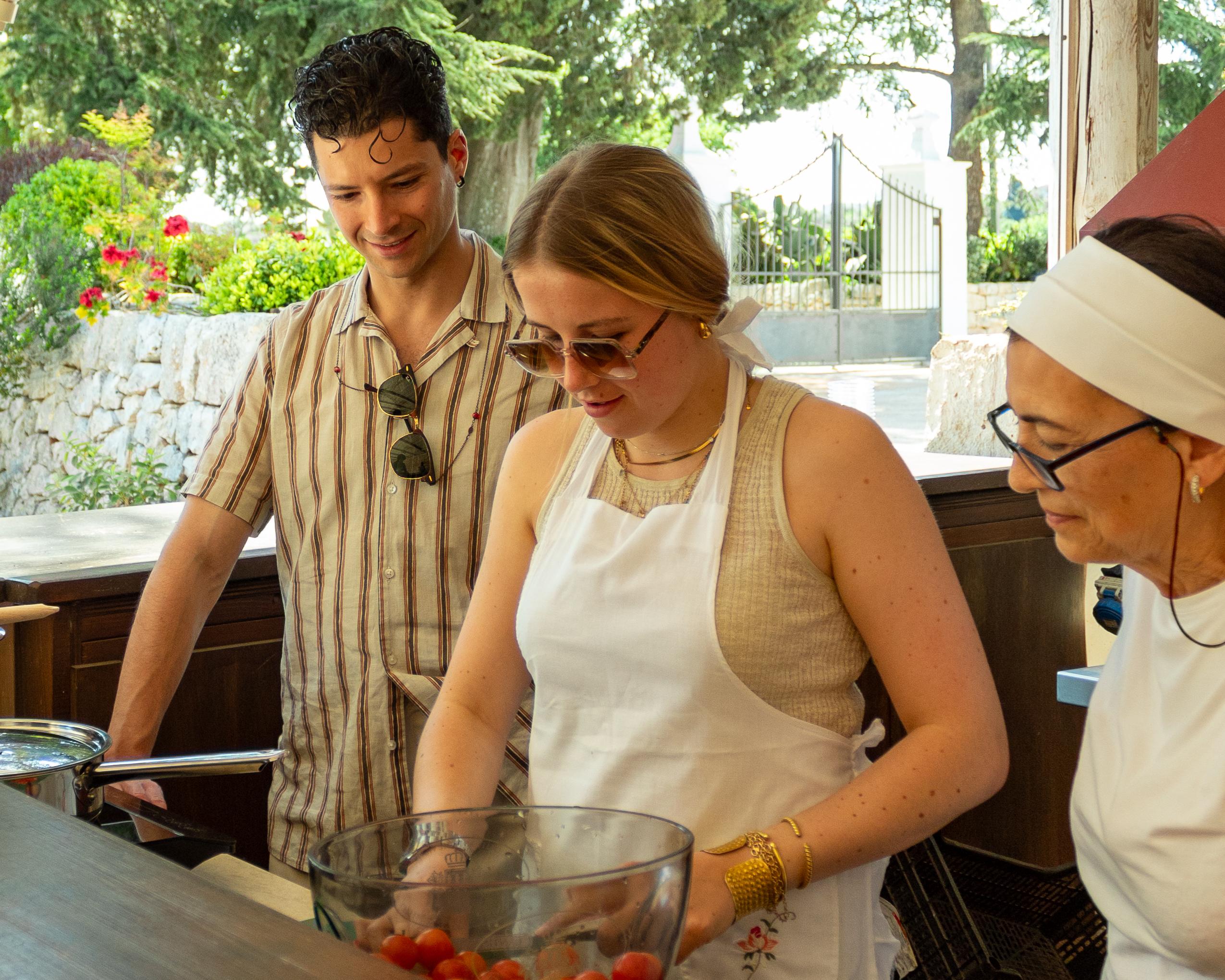
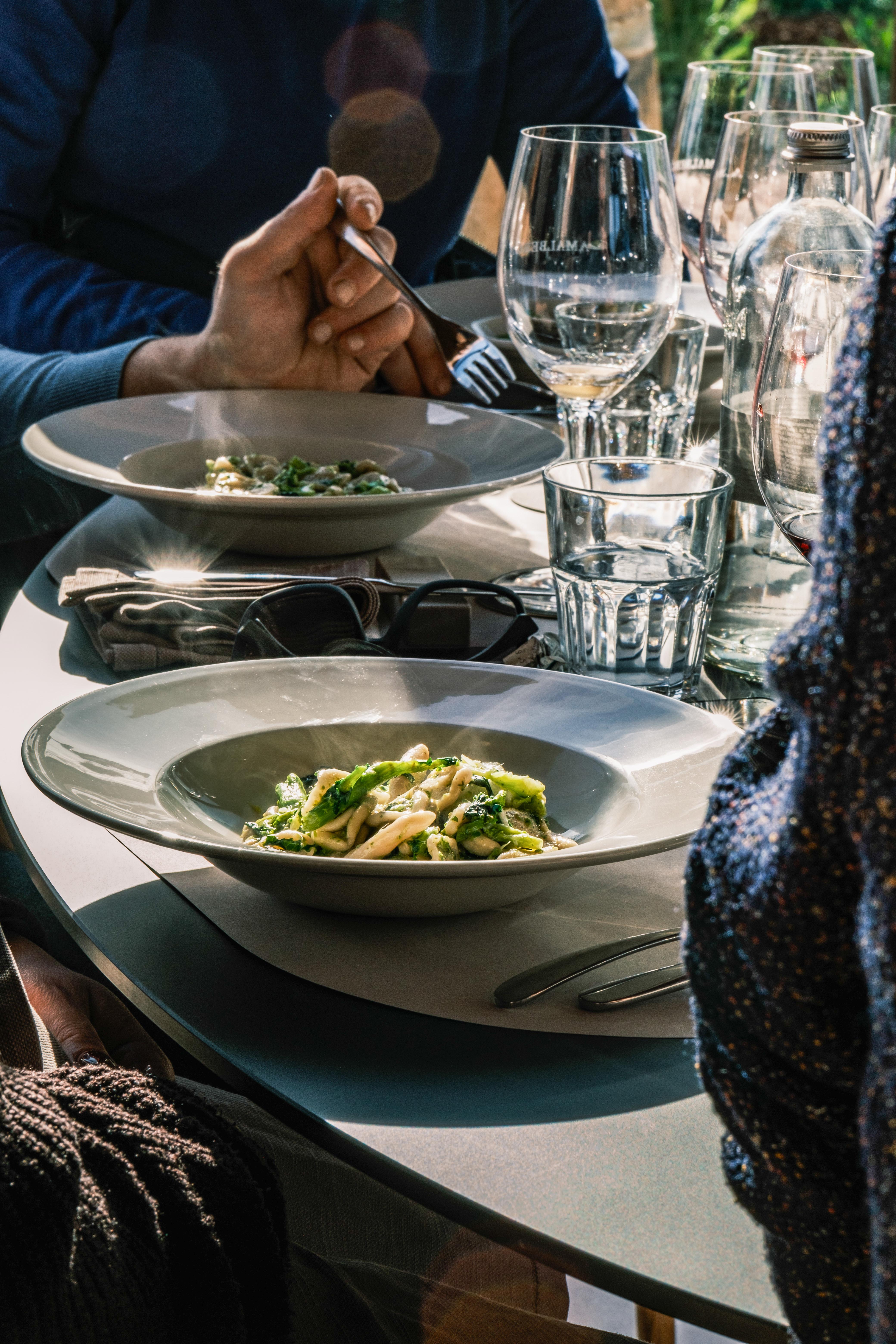
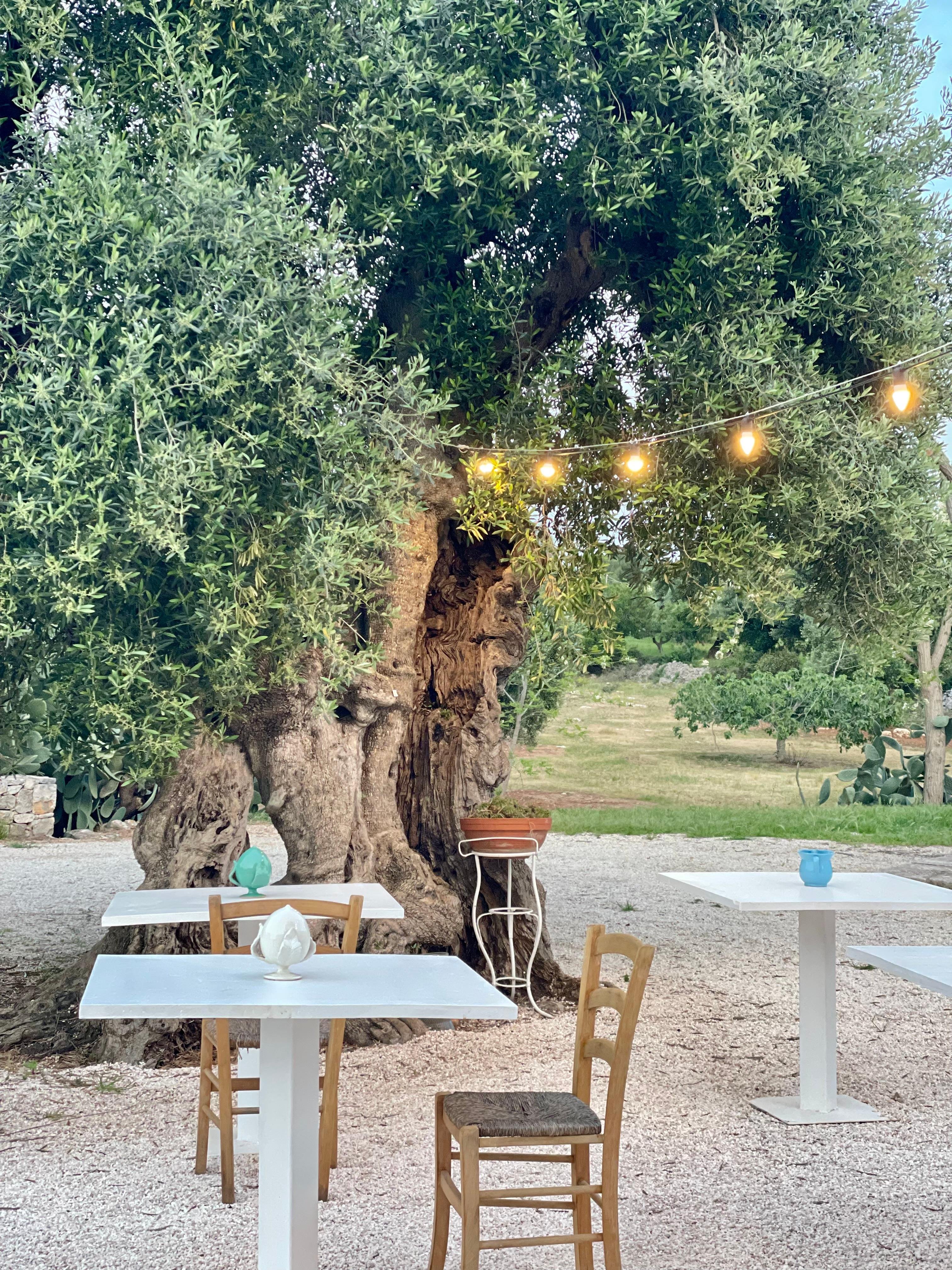
You watch the pot. Orecchiette drop in and rise within three minutes. You taste sauce, adjust salt, carry plates outside. At the farm and countryside sessions you eat at a long table under a pergola; at the Cantine Amalberga workshop you move into the cellar for pours alongside the pasta; in a private Ostuni home, tiramisu follows. You leave with flour on your forearms and a technique that survives the flight home.
All the details about your upcoming adventure in one place
Orecchiette are shaped with a blunt knife and a thumb, and no machine has ever replicated the gesture. The name means "little ears," and the form belongs to Puglia more completely than almost any other regional pasta belongs to its region.
In Ostuni, that inheritance sits inside a town of roughly 30,000 people, its centro storico lime-washed white against the Adriatic haze, ringed by an olive plain that holds trees certified as monumental by regional decree.
The technique predates the tourism that now surrounds it. Semolina di grano duro — hard durum wheat, ground coarse — has been the staple flour of the Murgia and the Valle d'Itria for centuries, chosen because it tolerates drought and stores well. Dough here is water and semolina only. No egg, no oil. That austerity is agricultural history rather than aesthetic preference: eggs were currency, and pasta was daily food. An Ostuni pasta cooking class inherits this arithmetic directly, and the recipes taught in farmhouse kitchens above the plain remain close to what was cooked in them a century ago.
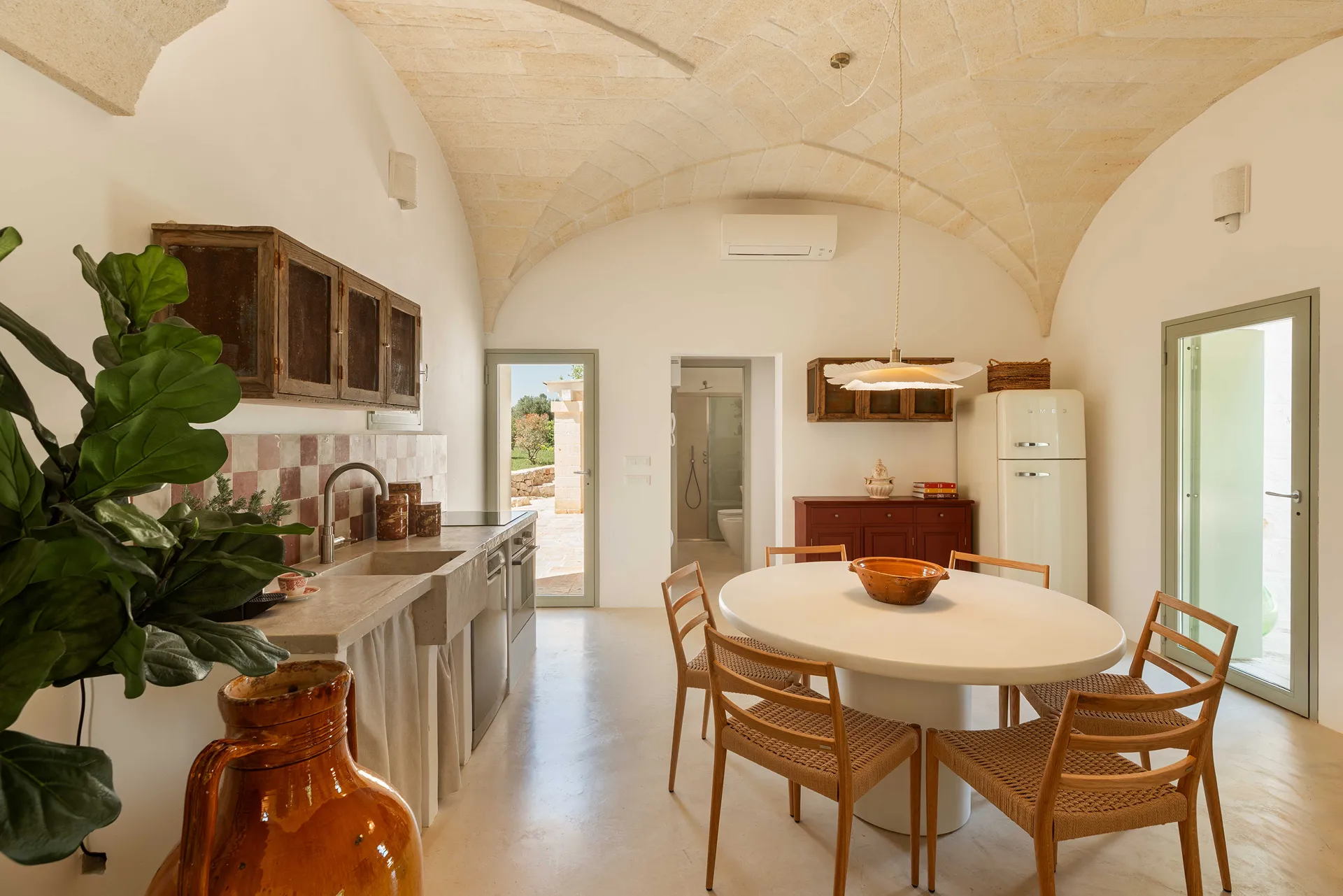
The surrounding architecture explains the food. Masserie — fortified agricultural estates, many dating to the sixteenth and seventeenth centuries — organised the countryside into self-sufficient units with their own ovens, oil presses and cisterns. Several still operate, and the working farms and wineries around Ostuni now host visitors in the same vaulted rooms. Trulli, the conical drystone dwellings of the Itria valley, punctuate the same landscape. Both building types share a logic of thick walls and cool interiors, which is why kitchens face north and why cooking traditionally began early.
What is grown nearby still dictates what is served. Cima di rapa, the bitter brassica married to orecchiette in the region's defining dish. Coratina and Ogliarola olives, pressed into oil with high polyphenol counts. Burrata from the Murgia dairies. Primitivo and Negroamaro vines running toward the coast, which is why one workshop on this page pairs pasta with a cellar visit rather than treating wine as an afterthought.
Ostuni's food culture was, until recently, domestic and unrecorded. The shift toward teaching it — the growth of Ostuni pasta cooking class tours over the past two decades — has documented gestures that were previously passed only between generations of women in a single household. The nonne who lead many sessions are not performing heritage. They are continuing it, in the room where it was always practised.

Dough here is water and semolina only — no egg, no oil — and that austerity is agricultural history rather than aesthetic preference.
Casual and comfortable clothing is recommended for an ostuni pasta cooking class. Participants should wear closed-toe shoes for safety in the kitchen environment.
Storage space for personal bags is limited at most local kitchens. Please bring only necessary items to your ostuni pasta cooking class.
Photography is encouraged during your ostuni pasta cooking class tour to document the preparation process. Please be mindful of the instructor and other participants while filming.
Families are welcome to join an ostuni pasta cooking class provided children are supervised. Check specific age requirements listed on the product booking details.
Most historic venues for an ostuni pasta cooking class are located in older buildings with steps. Please inquire regarding specific mobility needs prior to booking.
All necessary ingredients are provided during the ostuni pasta cooking class. Please notify the operator of any food allergies or dietary restrictions during the booking process.
Opening Hours
09:00–20:00
Address
Ostuni, Province of Brindisi, Italy
Accessibility
Private cooking venue access
Best arrival window
09:00–18:00
Storage
Not available
Region
Puglia
Car · N/A · N/A
Park in designated areas outside the restricted traffic zone in Ostuni.
Taxi · Variable · Variable
Request drop-off near Piazza della Libertà for easy access.
Full refunds are typically provided for bookings cancelled at least 24 hours prior to the session. No entrance fee of 0 EUR applies as these are private, pre-booked experiences.
Recommended time
3-4 hours
Participating in an ostuni pasta cooking class typically requires a half-day commitment to fully master techniques like shaping orecchiette by hand. We recommend arriving during the 09:00–18:00 window to ensure fresh ingredient sourcing and comfortable daylight working conditions. These private ostuni pasta cooking class tours operate as scheduled sessions, meaning you avoid public queues entirely when securing your ostuni pasta cooking class tickets. Planning your itinerary around these culinary workshops allows you to balance hands-on learning with time to explore nearby whitewashed architecture.
Crowd levels through the day
Weather · crowds · average price — dots go green to amber to red as each metric rises.
Mild temperatures make the historic streets comfortable for walking to your class.
August brings peak activity, perfect for fresh tomato and basil-focused ostuni pasta cooking class sessions.
Harvest season offers fresh local olive oil for your recipes.
Cooler days are ideal for indoor cooking activities in traditional settings.
Secure your ostuni pasta cooking class tickets early during summer months. Popular sessions fill up quickly.
Communicate all food sensitivities clearly before your ostuni pasta cooking class tour begins.
The historic streets of Ostuni feature uneven stone paving. Wear supportive footwear for walking to your meeting point.
Capture the traditional orecchiette shaping techniques during your ostuni pasta cooking class experience.
Summer temperatures in Puglia can be high, so carry water before your session.
Puglia's pasta begins with grain. The region's durum plains fed Rome, and semolina worked with water alone — no egg — remains the base of every ostuni pasta cooking class today. The orecchiette itself is traditionally traced to the Angevin court of the thirteenth century, whose Provençal crosets were pressed thin against a board. A Bari notarial document of 1596 is customarily cited as the earliest written trace of the little ears. Ostuni's own kitchens were shaped by catastrophe. When plague crossed the Kingdom of Naples in 1657, the town credited its deliverance to Sant'Oronzo, and lime whitewash — a disinfectant before it was an aesthetic — fixed the colour of the Città Bianca. Each 26 August the Cavallo Parato procession repeats that vow. The fortified masserie of the sixteenth and seventeenth centuries pressed olives and stored grain, and their vaulted rooms now host many ostuni pasta cooking class tours. Modern access arrived by law. Italy's Law 730 of 1985 legalised agriturismo, permitting working farms to feed and instruct visitors. In the 1990s the Collina di Brindisi extra virgin olive oil received DOP protection, giving the local table a documented standard. Rising Brindisi air traffic through the 2010s carried outsiders into the Valle d'Itria, and the household corso di cucina became a visitor-facing craft. The structured ostuni pasta cooking class tour followed from that shift. What survives is the gesture. Semolina, water, a dull knife, a thumb. Local cooks still turn orecchiette, cavatelli and strascinati at domestic speed, dressing them with cime di rapa or a slow ragù among the trulli and olive groves that define these Puglia landmarks. Sessions remain private rather than ticketed at a gate: there is no entrance fee, and hosts receive guests daily between 09:00 and 20:00. Ostuni pasta cooking class tickets are therefore arranged per session, directly with the kitchen that teaches.
Angevin rule carried Provençal crosets into Puglia, the form traditionally identified as the ancestor of orecchiette.
A Bari notarial document is customarily cited as the earliest written record of orecchiette in the region.
Fortified masserie across the Ostuni countryside milled grain and pressed olives, creating the farmhouse kitchens still in use.
Ostuni credited Sant'Oronzo with sparing the town from plague, and protective lime whitewash hardened into the identity of the Città Bianca.
Italy's Law 730 legalised agriturismo, allowing working farms to host, feed and teach paying visitors.
Collina di Brindisi extra virgin olive oil obtained DOP protection, formalising the fat that dresses the local pasta.
Growth in Brindisi air traffic opened the Valle d'Itria to outside visitors, turning the domestic corso di cucina into a taught craft.
Sessions run as private bookings with no entrance fee, with hosts receiving guests daily from 09:00 to 20:00.
Stand at the edge of the square looking toward the historic white center for a shot of the skyline before your ostuni pasta cooking class.
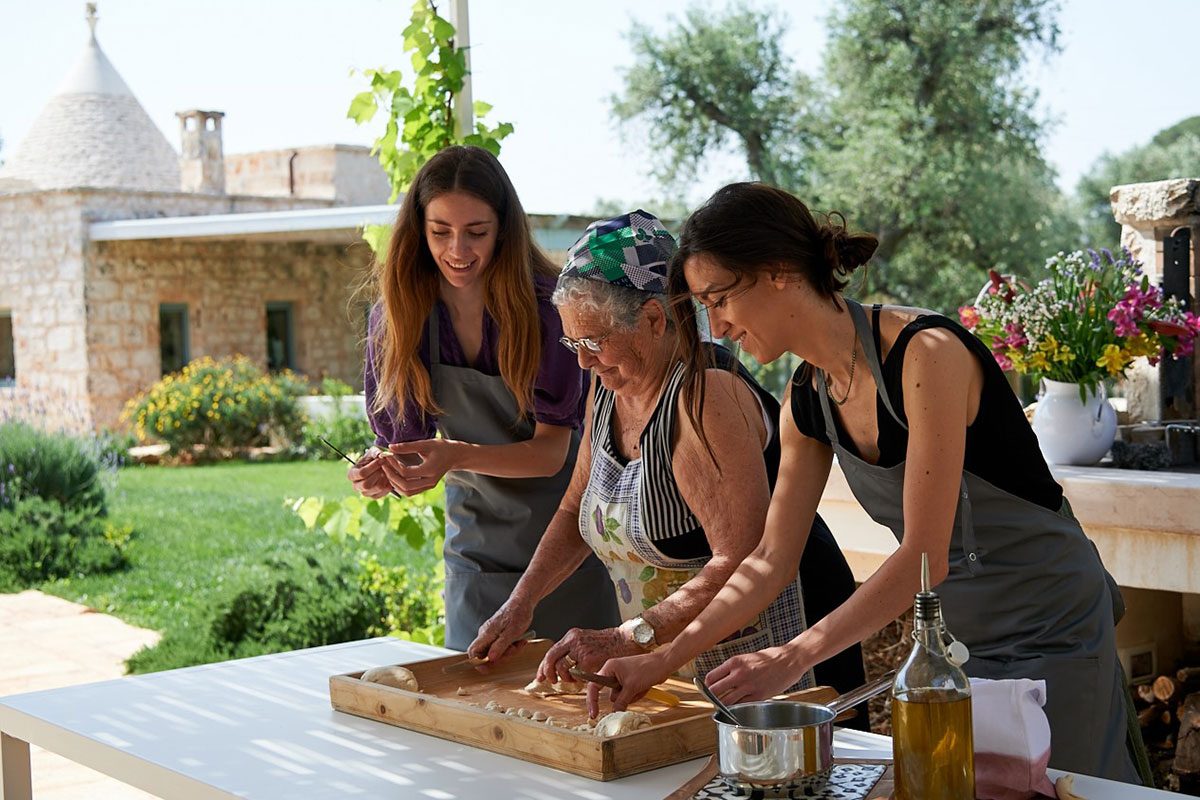
Capture the technique of shaping orecchiette on a traditional wooden board; ensure you stand at a 45-degree angle to the dough for the best depth.
This rustic outdoor space provides a textured backdrop for photos of fresh flour-dusted hands and locally sourced ingredients during your ostuni pasta cooking class tour.
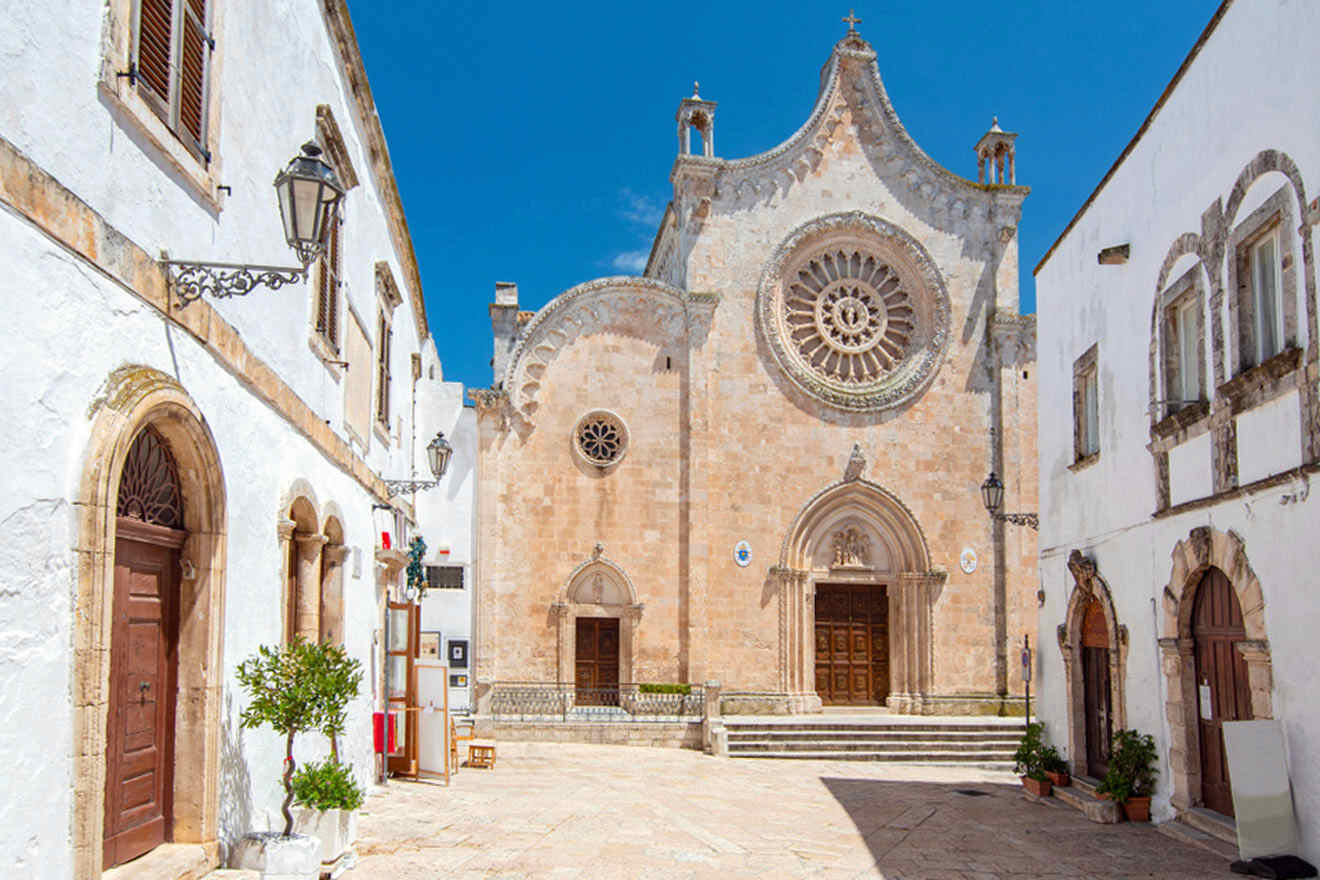
Position yourself in the narrow alleyway leading up to the cathedral to frame the gothic architecture against the blue sky, ideal for your ostuni pasta cooking class tickets holders.
Engaging in an ostuni pasta cooking class is a delightful way for families to connect with local traditions through hands-on activity. These intimate sessions allow children of all ages to learn the tactile art of shaping orecchiette while enjoying the welcoming atmosphere of a countryside home.
Look for private home-based sessions that offer a relaxed, multi-generational environment perfect for teaching kids how to knead dough and shape pasta.
While the historic center of town has uneven cobblestones, many farm-based venues for an ostuni pasta cooking class tour are located in spacious country settings that easily accommodate strollers.
These experiences are highly suitable for children who enjoy sensory activities like rolling dough, with many hosts providing specialized support for younger participants to join in the fun.
Many rural workshop locations provide family-friendly amenities, including high chairs, and can often accommodate specific dietary requirements if requested during the booking of your ostuni pasta cooking class tickets.
Scheduling your session for the morning hours allows for optimal time for fresh ingredient sourcing and daylight cooking, keeping the rhythm steady for younger family members.
When planning, consider that these interactive ostuni pasta cooking class tours are best booked as private experiences to ensure personalized attention for your group.
Exploring the historic center near your ostuni pasta cooking class provides numerous opportunities to savor authentic Puglian flavors. After mastering orecchiette techniques, these nearby establishments offer the perfect environment to enjoy traditional handmade semolina noodles and local olive oil.
Located in a historic cave setting, this venue specializes in regional antipasti and classic pasta dishes. It is a popular spot, so arrive early for an authentic dinner experience after your workshop.
This atmospheric lounge serves refined snacks and local wine, making it an excellent choice for a light meal or an aperitivo. It is a local favorite for those seeking a relaxed vibe in the heart of the old town.
Positioned a short stroll from local studios, this eatery offers wood-fired pizzas and grilled meats. It suits visitors who want a hearty, casual meal following their hands-on ostuni pasta cooking class tour.
Everything you need to know for your journey
The venues operate daily from 09:00–20:00. This fits within the recommended 09:00–18:00 arrival window for your ostuni pasta cooking class.
Tickets for any ostuni pasta cooking class must be booked in advance as they are private experiences. There is no entrance fee of 0 EUR payable at the door.
Due to the historic nature of Ostuni, some venues may have stairs. Please confirm specific accessibility needs before your ostuni pasta cooking class.
Bring comfortable shoes, sun protection, and your booking confirmation for your ostuni pasta cooking class.
Children are welcome to participate in an ostuni pasta cooking class with adult supervision.
Yes, you are encouraged to take photos during your ostuni pasta cooking class tour.
The best way to reach your ostuni pasta cooking class is by parking outside the historic center and walking or taking a taxi.
All food is provided by the instructor during your ostuni pasta cooking class; outside food is typically not required.
You may receive a full refund if you cancel your ostuni pasta cooking class at least 24 hours in advance.
A stunning example of Romanesque-Gothic architecture located in the old town.
An historic palace representing the architectural heritage of the region.
The defensive perimeter offering panoramic views of the surrounding olive groves.
The central hub of the city featuring the Obelisk of Saint Oronzo.
A high-end boutique hotel located within the historic walls.
A central hotel providing convenient access to local dining and shops.
The historic center area offering numerous independent guesthouses.
Join thousands of happy travelers who have discovered this incredible experience
Book Your Experience Now